
From the Iranian Highlands to Rock Gardens: Native Plants with Ornamental Potential
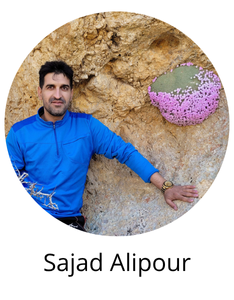
Sajad Alipour, Ph.D. in Ornamental Plants and Landscape from Ferdowsi University of Mashhad, Iran, is a distinguished botanist, ecologist, and horticulturist renowned for his extensive research on Iranian native plants. With over a decade of fieldwork, he specializes in the ecology, propagation, and commercialization of Iranian alpine and bulbous plants, focusing on climate change, seed biology, phenological stages, adaptation, and dormancy. As one of Iran’s foremost experts in Dionysia and bulbous plants, Sajad has discovered or introduced nine new plant species since 2021, including Dionysia splendens (2021), Dionysia persica (2025), Dionysia alipourii (named in his honor), Tulipa sarvestanica, and Muscari zagricum, among others. He serves as Associate Editor of the European Journal of Horticultural Science and Iran’s Representative in the IUCN SSC Wild Tulip Specialist Group, leading conservation efforts. Conducting over 100 days and 40,000 km of fieldwork annually, Sajad manages Iran’s largest collection of endangered native plants. At the 5th Czech International Rock Garden Conference, Sajad will showcase a stunning array of Iranian native plants for rock gardens, illustrated with his own photographs, highlighting their beauty, resilience, and horticultural potential.
Botanical highlights of the Southern Alps (New Zealand alpines).
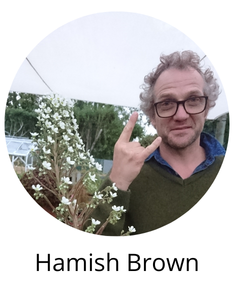
Hamish was borne and raised on a high country sheep and cattle station on the iconic Pisa range (Otago, New Zealand) an had an interested kindled in alpine plants from the earliest age. Studying and working with broad arcre crops on the canterbury planes has left no room for alpines in his career. Instead, it has spilled over to dominine the spare time of he and wife (Mika) in their home gardening and recreational persuits. They are avid cultivaters of alpine plants, focusing mostly on raising exotics from seed and developing unique gardens to house them. On top of that, Hamish gets into the mountianious back bone of the South Island (Southern Alps) as often as possible to photograph the unique and fascinating botanical inhabitants. Hamish’s talk will provide an overview of the best plants that he has come across in his extensive travels along with tales of adventure in getting to them and friendships formed with fellow plant explorers. The genus Ranunculus formed a common objective for may exbiditions, providing both photogenic specimens and a tantelising challenge of access to the botanist. This will form the heart of the talk, supplementled with a hearty dose of Celmisia, Raoulia, Haastia, Aciphylla, Anesotome, Veronica, Myosotis and other exquisite specimens encountered high up in the alps. The southern Alps offers a wide diversity of species in all these genus and while none are new to science, few have taken foot in culitvation for a variety of reasions. So here is a great chance to get to know some more about these special plants.

Plants of historical Tibet (Qinghai-Tibetan Plateau), conference committee
The talk will present the new book „Flowers of Tibet-Qinghai Plateau“ (historical Tibet) by V. Holubec and D. Horák. The best plants from Tibet, Kunlun, Qinghai, Sechuan and Hengduan Shan
Vojtěch is a researcher in agricultural plant Gene bank and past National coordinator for plant genetic resources. He has been interested in alpines and botany since his 11 years. He loves mountains and he travels extensively to photograph plants and wild habitats, in the world. He got obsessed in crevice rock garden construction, he constructed main rock gardens in the show garden of Rock Garden Club Prague (RGCP) together with Ota Vlasak and Zdenek Zvolanek and they got Gold medal for RG construction in the International Horticultural Exhibition IGA Erfurt, Germany. He headed shows of the RGCP and now he is the President of RGCP. He runs seed nursery. He published 3 books on RG construction with Ota Vlasak, The Caucasus Flowers with Pavel Křivka and The Tian Shan and its flowers with David Horák. He was awarded by Lyttel Trophy by AGS in 2010.
Czech breeding of Saxifraga sect. Porphyrion ser. Kabschia (formely Porophyllum).
The lecture is dedicated to Karel Lang.
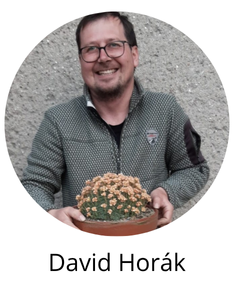
Botanist by education, now actively involved in running one of the Czech oldest plant nurseries. His main gardening and, extensively, also scientific interest is devoted to the genus Saxifraga. But he likes “playing” with the cultivation of many other alpine plants and conifers and their combinations in planting in rock gardens. He also likes to catch the possibilities for travelling to different mountains and has been honoured to join Vojtech Holubec and Josef Jurasek on their travels.

The Best of the West (new and little known alpines of Western America)
There are over 500 mountain ranges in the Western United States between Canada and Mexico, the Great Plains and Pacific Ocean. These are like sky islands rising out of a sea of steppe covered with sagebrush and grasses. Practically every range has some variation on Penstemon, Erigeron, Eriogonum or Phlox—or something totally distinct. Many of these ranges are still relatively unknown by botanists—new taxa and forms are always being found. The scenery here is extraordinarily diverse and beautiful.
Panayoti Kelaidis has worked as Curator at Denver Botanic Gardens since 1980. For 11 years he ran Rocky Mountain Rare Plants, collecting seed throughout the West and selling it mail order. He has explored repeatedly across Eurasia, Africa and South America and New Zealand. He served as president of the North American Rock Garden Society from 2021-2024. Best known for having introduced the first Delosperma to cultivation in 1981—he has a special passion for bulbs and chasmophytes

Alpines and Bulbs at Göteborg Botanical Garden
A presentation of the alpine and bulb collections at Göteborg, reflecting on the most precious species. During my 16 (18 by the time of the conference) years at GBG, a ton fold of fascinating and beautiful gems has come through. Some long-lasting and some for a very brief visit. The fascination of growing Alpines and Bulbs, their growing regimes, with success and failures.
Johan Nilson has been part of the GBG Alpine team since 2009 and has 16 years of experience growing Alpines and Bulbs. He travels widely for plants in the wild and Turkey, the Himalayas, North America and Central Asia lies close to heart. He has a special interest in Himalayan alpine plants and northern hemisphere geophytes, with a focus on their cultivation.
Alpines around Santiago and northern Patagonia
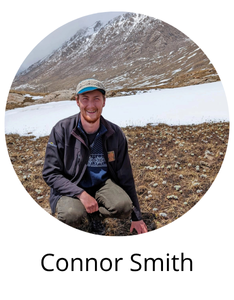
Connor and Luca Magi travelled to Chile, after a 20 year long drought had ended we enjoyed tremendous flowering of an exquiste flora.
Connor is currently in charge of the Rock Garden at Utrecht Botanic Garden which is one of the largest in Europe. Connor Smith has worked in America for Iseli nursery, one of the world’s leading conifer nurseries. Work for Zu Jeddeloh nursery in Germany Then, it was on to Vannucci Piante in Pistoia, Italy – the largest growing area in Europe. Connor gained an interested in alpine plants from alpine expert Elspeth MacKintosh at RBGE. Elspeth’s passion and knowledge inspired Connor to further pursue a world in alpine plants. In 2019, he worked for the Schachen Alpine Garden high in the German mountains on a Merlin Trust placement. Connor travels widely to see plants in the wild and has given talks on a varied assortment of plants in around 12 countries.

Plants from all parts of Turkey
The speaker is a retired architect rock gardening at Beauty Slope in Czech Karst, village Karlík near Prague. He is an internationally recognized lecturer, horticultural writer, Prague Show Arranger, and the editor of two journals. He is known as an apostle preaching crevice gardening but he was known as a keen seed collector and mountain explorer from 1980. He is the second Czech plantsman who was awarded the Lyttel Trophy by the AGS in 2021.
Dinaric Alps is a big limestone mountain chain running from Albania through Montenegro and Bosnia towards Croatia. This area is rich with crevice-loving plants. From those charming peaks, we will see the best rock garden plants from Slavonic Bulgarian and Greek Macedonia. proper admiration of limestone-loving plants, we have to see limestone ranges of the West and East Anatolia. The Alps of Kurdistan in Eastern Anatolia are offering true alpines but also excellent high steppe plants for hot and dry gardens. The speaker explored the Bulgarian mountains from 1975 and Kurdistan from 1985 so his knowledge of plants in nature and cultivation is outstanding.